




Financing
Ariane Bibas · Mortgage Loan OfficerNMLS #2833531 · CA DRE #02225025

Ariane Bibas
Meet Your Loan Officer
Mortgage Loan OfficerNMLS #2833531 · C2 Financial Corporation
- Architectural & Interior DesignerAriane Bibas Design
- REALTOR®CA DRE #02225025 · Cal State Realty
- Founder & Creative DirectorAriane Bibas Branding & Web
I’ll explain each number before you sign anything.
I start by listening: what you’re buying, building or refinancing, for a home or your business, and what payment feels comfortable. Then I lay out your options in plain language. I stay with you through underwriting, appraisal and closing, and you can reach me directly the whole way.
Why a Broker
I shop the lenders, so you don’t have to.
A bank can only offer you its own loans. As a mortgage loan officer with C2 Financial, a mortgage brokerage, I’m not tied to any one lender: I compare 100+ wholesale lenders side by side for residential and commercial loans, and when a loan calls for it, I reach beyond that list to specialty and private lenders.
Let’s Shop the Market- I work for you, not a bank. My job is the loan that fits you, not selling one lender’s products.
- More choices, sharper pricing. When lenders compete for your loan, you see more programs and more competitive terms.
- Residential and commercial. Homes, second homes and rentals, plus the building behind your business, all through one loan officer.
- The loans banks turn down. Self-employed, jumbo, construction, investor and non-QM loans go to the lenders who specialise in them.
- Backed by experience. C2 Financial brings 30+ years in the business and $63 billion in loans funded.
Rates and terms depend on credit, property and market conditions. Not a commitment to lend.
What's Your Story?
First-Time Buyers
The Obstacles May Be Smaller Than They Feel. Let's Look at Your Options.
Your first keys, step by step.
Book a Call- 01
Down payment feels out of reach?
FHA, VA, and conventional programs each open a different low-down-payment path — and California down payment assistance programs may reduce out-of-pocket costs for eligible buyers.
Read the Down Payment Assistance Guide - 02
Not sure where you stand?
Credit questions? Self-employed? Complex income? FHA has its own credit guidelines, and bank-statement or Non-QM programs exist for some self-employed borrowers (they often cost more). Every program has qualification requirements — I can review which options may be worth comparing.
Explore Qualifying Options - 03
Don't know where to start?
Try the free two-minute Loan Finder — no name or email needed — to see which programs may be worth comparing before you call. (An actual pre-approval does require a credit review.)
Try the Loan Finder
Second-Time & Second-Home Buyers
Buy Before You Sell, or Add a Place Without Giving Up Your First Rate.
Move up, or add a place by the water.
Book a Call- 01
Need to buy before your current home sells?
Bridge financing may let you access your existing equity for a down payment before your sale closes.
Learn About Bridge Loans - 02
Financing a vacation or second home?
Second-home loans follow different guidelines than investment properties, so pricing and down payment requirements can differ — worth comparing.
Try the Loan Finder - 03
Not sure whether to buy or sell first?
Try the free two-minute Loan Finder to estimate your buying power before you decide.
Try the Loan Finder
Renovators & Builders
Some Loans Look at What It's Worth When You're Done — Not Just What It's Worth Today.
Fund the build, not just the house.
Book a Call- 01
Buying a fixer-upper?
Some renovation loans are based on the estimated after-renovation value, so the purchase price and rehab budget may be combined into one loan, subject to program limits.
Learn About Renovation Loans - 02
Adding an ADU?
Depending on the program, projected ADU rental income may count toward what you can borrow. DSCR loans are one option to compare — they often carry higher rates.
Explore DSCR / Investor Loans - 03
Building from the ground up?
Construction-to-permanent financing can combine your construction loan and your final mortgage into one closing.
Learn About Construction-to-Permanent
Tap Your Equity or Refinance
Keep Your Rate and Borrow Against What You've Built, or Replace It If the Math Works Out Better.
Put the home you own to work.
Book a Call- 01
Want to keep your first mortgage untouched?
A HELOC or home equity loan borrows against your equity as a second loan, so your existing rate stays exactly as it is.
Learn About HELOCs - 02
Want a lower rate or shorter term?
A rate-and-term refinance replaces your current mortgage without pulling out cash.
Learn About Refinancing - 03
Need cash for a renovation or other expense?
A cash-out refinance replaces your mortgage and turns the equity you've built up into funds at closing.
Learn About Cash-Out Refinancing - 04
Adding an ADU for rental income or family?
You don't need to be mid-renovation to do this — a HELOC or cash-out refinance can fund an ADU on its own, and an ADU may add property value and rental income.
Read the ADU Financing Guide
Investors
Some Investor Loans Look at the Property's Income, Not Just Your Paycheck.
Rentals, guest houses and income property.
Book a Call- 01
Buying a rental property?
DSCR loans generally qualify on the rent the property is expected to generate rather than your personal income — they often carry higher rates and larger down payments than conventional loans.
Explore DSCR / Investor Loans - 02
Renovating for resale or rental?
Renovation lending can finance the purchase and the rehab budget together, based on the estimated after-renovation value.
Learn About Renovation Loans - 03
Self-employed or have complex income?
Bank-statement and Non-QM programs may qualify you on deposits and assets instead of a standard pay stub — they typically cost more than conventional loans.
Explore Qualifying Options
Business & Commercial
Financing the Building Behind Your Business.
A building for the business you run.
Book a Call- 01
Buying a building for your business?
Commercial and SBA loans can finance a property your own business will occupy. Terms vary by lender, property type and borrower.
Talk About a Commercial Loan - 02
Is the seller willing to carry the note?
Seller financing can stand on its own or sit alongside a bank or SBA loan. Model the payment, the rate and any balloon before you negotiate.
Try the Commercial Calculator - 03
Not sure which loan fits?
Tell me about the business, the property and your numbers, and I will walk you through the options that may fit.
Start a Conversation
Downsizing or Retiring
Right-Size, or Free Up What You’ve Built.
Right-size, or free up what you’ve built.
Book a Call- 01
Ready to right-size?
Selling a larger home can free up equity for the next one, sometimes with a smaller loan or none at all. Buying before you sell is an option too.
Learn About Bridge Loans - 02
Curious about a reverse mortgage?
For homeowners 62 and older (a program requirement), a reverse mortgage turns part of your equity into cash or a line of credit. It has real costs and trade-offs worth walking through together.
Explore Reverse Mortgages - 03
Staying put and adapting the home?
An age-in-place remodel, such as a main-floor primary suite or a step-free entry, can be financed with a HELOC or renovation loan, and designed with care.
See Design/Build
Rebuilding After a Disaster
Rebuilding Options Exist — Let's Review Yours.
A path back home.
Book a Call- 01
Lost your home to a fire or disaster?
FHA's 203(h) program and renovation-style financing exist specifically for this situation — knowing which pieces apply to you starts with a conversation.
Read the Rebuilding Guide - 02
Rebuilding on your own lot?
Depending on the lender and program rules, 203(h) may be paired with renovation-style draws to finance the rebuild itself, in one loan.
Learn About FHA 203(h)
Sound Familiar?
The things that hold buyers back are usually smaller than they feel. Tap one for a straight answer.
Credit & Income
Low credit score
Many programs work with scores lower than people expect, and some look at your whole picture rather than one number. A few targeted steps before you apply can also help.
Read more in the glossaryHigh debt-to-income
Lenders compare your monthly debts with your income. Paying down a balance, adding a co-borrower or choosing a different program can change the math.
Read more in the glossaryNew job or job change
A new job in the same line of work is often fine. A gap or a change of field needs a little more explaining, and I can help you document it.
Read more in the glossarySelf-employed write-offs
Write-offs that lower your taxes also lower the income a lender sees. Bank-statement and other non-QM loans can look at your deposits instead.
Read more in the glossaryDeferred student loans
Even loans on pause usually count toward your monthly debts, using a set formula. Which formula your program uses can make a real difference.
Read more in the glossaryCash & Savings
Not enough cash to buy
Down payment assistance, gift funds and low-down-payment programs exist, and many buyers never hear about them. Eligibility depends on the program.
Read more in the glossaryClosing cost shock
Closing costs come on top of the down payment. Seller or lender credits can sometimes cover part of them, and you see the full picture from me up front.
Read more in the glossaryMattress money, no paper trail
Cash that hasn’t been in a bank account is hard for a lender to accept. Depositing it early and keeping a clear record gives it time to count.
Read more in the glossaryFamily gift, no gift letter
Help from family is welcome, but it needs a signed gift letter and a clear record of the transfer. It’s simple when it’s done in the right order.
Read more in the glossaryThe Property
Failed inspection
Repairs can hold up an FHA or VA loan. Sometimes the seller fixes them, and sometimes a renovation loan can finance them along with the purchase.
Read more in the glossaryLow appraisal
When the home appraises below the price, you can renegotiate, cover the gap or step away under your contingency. Knowing the options early keeps it calm.
Read more in the glossaryCondo HOA problems
Lenders review the whole condo association, not just your unit. Lawsuits or thin reserves can limit which loans work, and some programs are more flexible.
Read more in the glossaryMindset
Nervous about banks & lenders
You’ll have my direct line, and I explain why each document is needed before I ask for it. Nothing moves forward until it makes sense to you.
Talk it through with meNever heard of the help
Assistance programs, first-time buyer options and flexible loans are easy to miss. A short conversation can surface the ones you may qualify for.
Read more in the glossaryNew credit before closing
A new car, card or big purchase during underwriting can change your approval. Hold off on new credit until you have the keys.
Read more in the glossaryNot sure which story is yours? A few quick questions can help narrow it down.
Take the QuestionnaireLoan Finder.
Eight quick questions, no signup and no credit check to see your results. (An actual pre-approval does require a credit review.)
Browse Loans.
Find the loan that fits your plans. Buying your first home, moving up, building, renovating, tapping your equity, investing or financing a commercial property: each loan below is built for a different goal. Open any loan to see who it's for and the guidelines that matter most. Your actual rate and terms depend on your full application and the day you lock, so when one looks like a fit, let's run your real numbers together.
 Loan program
Conventional
Conventional
A widely used loan type that follows Fannie Mae & Freddie Mac guidelines.
- Down paymentprogram guidelines may allow as little as 3% for qualified borrowers
- Creditgenerally 620+ minimum; pricing typically improves at higher scores
- Mortgage insurancePMI if under 20% down — removable at 20% equity, auto-cancels at 78% loan-to-value
 Loan program
FHA
FHA
A loan program following Federal Housing Administration guidelines, with more flexible credit standards — used by first-time and repeat buyers.
- Down paymentprogram guidelines may allow as little as 3.5% with 580+ credit, or 10% with 500–579, for qualified borrowers
- Creditprogram minimum 500 (below 580 requires the 10% tier); many lenders set higher minimums
- Mortgage insuranceMIP for life of loan under 10% down; cancels after 11 years at 10%+ down
 Loan program
Jumbo
Jumbo
For loans above your county's conforming limit — common at Orange County prices. Available fixed-rate, ARM, or interest-only.
- Applies above$1,249,125 in Orange County (high-cost limit) — $832,750 in standard-cost counties
- Down paymenttypically 10–20%
- Creditstrong, plus cash reserves
- Mortgage insuranceusually none at 20% down
 Loan program
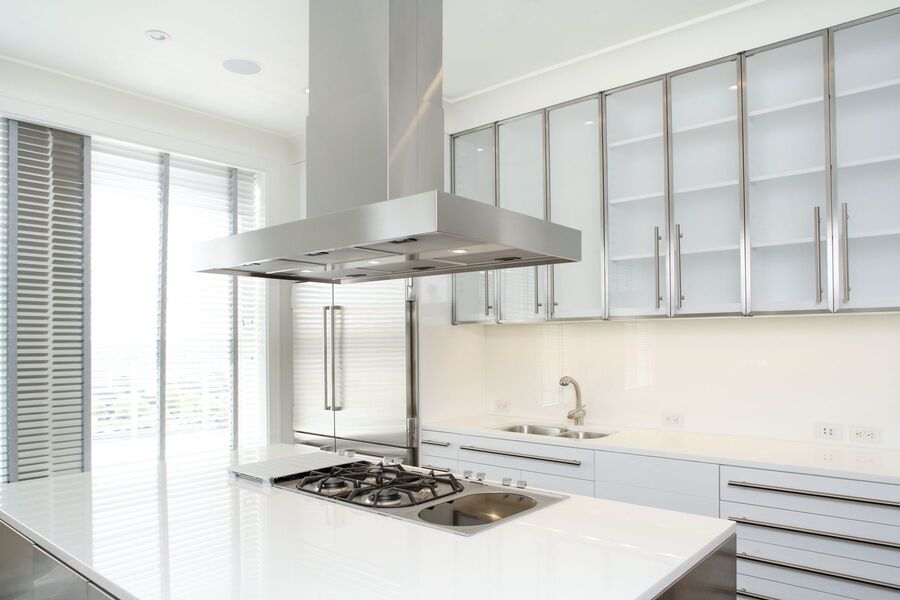
Construction & Renovation
Construction & Renovation
Finance a ground-up build or a remodel, sized to what the home is expected to be worth once the work is done.
- Buildconstruction-to-permanent: one closing that funds the build, then converts into your long-term mortgage when the home is complete
- RemodelFHA 203(k) and conventional HomeStyle® combine the purchase or refinance and the improvements in one loan
- Drawsfunds are released in stages as work is completed and verified, not all at once
 Loan program
HELOC
HELOC
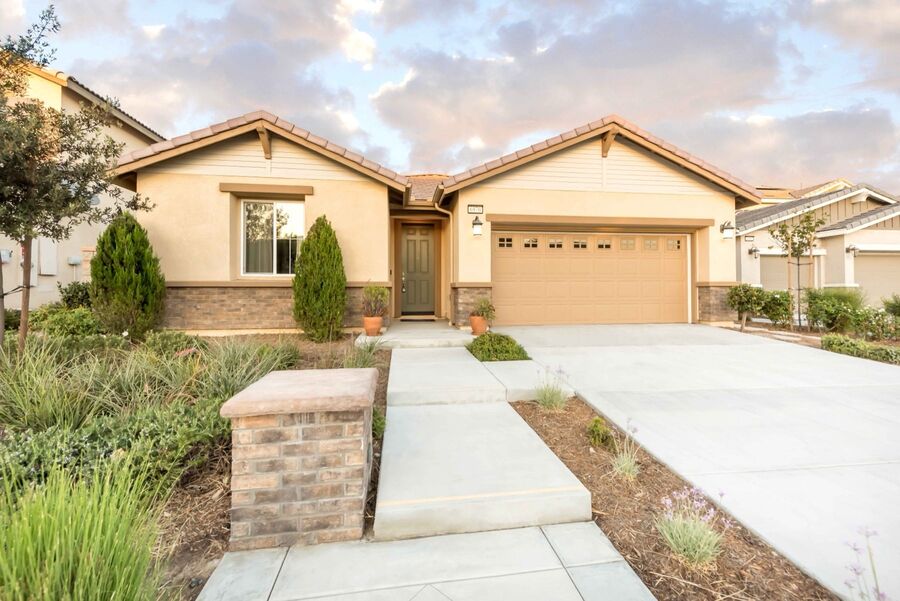
A home equity line of credit: a revolving line secured by your home that sits behind your first mortgage, so your existing rate stays untouched.
- How it worksdraw only what you need, and pay interest only on what you've drawn
- Structuretypically a draw period followed by a repayment period, usually at a variable rate
- Line sizebased on combined loan-to-value: your first mortgage plus the line, measured against the home's value
- Fixed optiona home equity loan pays a lump sum on a set schedule instead
 Loan program
Refinancing
Refinancing
Replacing your current mortgage with a new one — to lower your rate, shorten your term, or turn equity into cash.
- Rate-and-termmay lower your rate or change your term, no cash out
- Cash-outborrow more than you owe and receive the difference at closing
- Cash-out max80% loan-to-value on a primary residence (conventional)
- May make sense whenthe savings clear the closing costs within a reasonable timeframe
 Loan program
Non-QM
Non-QM
For borrowers who don't fit the standard box. These programs typically cost more than conventional loans.
- Qualifies onbank deposits, assets, or rental income — not a standard pay stub
- Down paymenttypically 10–25%, program-dependent
- Used byself-employed owners, borrowers qualifying on assets, and high-net-worth buyers
 Loan program
Bank-Statement
Bank-Statement
For self-employed borrowers whose tax write-offs make their returns understate what they actually earn.
- Qualifies on12–24 months of bank statements instead of tax returns
- Credit660+ typical (varies by lender)
- Down paymenttypically 10–20%
- Used bybusiness owners, 1099 contractors, and freelancers
- Pricingtypically higher than conventional loans
 Loan program
DSCR / Investor
DSCR / Investor
Qualify on the property's rental income — not your paycheck. One option investors compare; pricing is typically higher than conventional loans.
- Qualifies onwhether the rent covers the payment
- Minimum DSCRoften 1.0–1.25x, varies by lender
- Down paymenttypically 20–25%
- Used forrentals, ADU income, investors with write-offs
- Alsoconventional investment loans, typically 20–25% down
 Loan program
VA
VA
For veterans, active-duty service members, and surviving spouses. A home loan benefit earned through service.
- Down paymentprogram guidelines may allow 0% down for eligible borrowers
- Creditno VA-set minimum; lenders set their own requirements
- Funding fee2.15% first use / 3.3% reuse (no down) — as low as 1.25% with 10%+ down; exempt for veterans receiving VA disability compensation
 Loan program
Down Payment Assistance
Down Payment Assistance
State, county, and nonprofit programs that may help eligible buyers cover a down payment or closing costs — often paired with FHA.
- Structureusually a deferred or forgivable second loan, not cash handed to you outright
- CalHFA MyHomeup to 3.5% of price (paired with FHA) or 3% (conventional, VA, USDA), deferred second
- California programsCalHFA MyHome & ZIP, GSFA Platinum & OpenDoors, Forgivable Equity Builder Loan
- Designed forbuyers whose obstacle is cash to close, not income
 Loan program
USDA
USDA
Available in eligible rural and some suburban areas, with household income limits.
- Down paymentprogram guidelines may allow 0% down for eligible borrowers
- Credit640+ typically
- Guarantee fee1% upfront + 0.35% annual (in lieu of PMI)
- Income limithousehold income at or below 115% of area median income
 Loan program
Reverse Mortgage
Reverse Mortgage
Available to homeowners 62 and older (a program requirement) — converts home equity into cash or monthly income, with no required monthly mortgage payment. The loan balance grows over time.
- Eligibilityhomeowner age 62+, with sufficient home equity
- 2026 lending limit$1,249,125 nationwide (max claim amount)
- Paymentsno monthly mortgage payment required (property taxes, insurance and upkeep still apply) — the loan is repaid when the home is sold, is no longer the primary residence, or the last borrower passes
- Before you proceedindependent HUD-approved counseling is required
 Loan program
Disaster Recovery
Disaster Recovery
For homeowners rebuilding or repurchasing after a fire, flood, or other federally declared disaster.
- Down paymentprogram guidelines may allow 0% down for eligible borrowers
- Filing windowwithin one year of the disaster declaration
- Pairs withrenovation-style financing to rebuild on your own lot
 Something else
Don't See Your Loan?
Don't See Your Loan?
Bridge loans, ITIN, foreign national, interest-only, commercial and other specialty programs may be available. Tell me what you're trying to do, and I'll look for a program that fits.
Figures above are general program guidelines, not loan terms or an offer of credit — actual down payment, APR, and repayment terms depend on your qualifications, the program you select, and current pricing. Contact me for rates and terms specific to your situation.
Looking for a specific word, not a loan program? The full Glossary covers every term, searchable A–Z.
Found a loan that looks like a fit? See what it could mean month to month.
Run the NumbersLoan Calculators.
Start by seeing how much you can afford, or pick any of the ten calculators. Estimates for planning only, not a loan offer.
Quick Loan Match
For anyone who isn't sure what kind of loan they even need yet. Enter your price and down payment, check any boxes that apply, and see a loan program worth exploring first.
—
| Loan amount | — |
| Jumbo territory? | — |
Also worth comparing:
Simplified estimate based on typical program guidelines and a 2026 high-cost conforming loan limit of $1,249,125 (the 2026 FHFA high-cost limit, which applies in Orange County, CA) for a 1-unit home. Your actual county, occupancy, property type, and full financial profile can change this. For a deeper personalized walkthrough, try the Loan Finder. Not a pre-qualification or loan offer.
Monthly Payment Calculator
For any purchase loan — conventional, FHA, VA, or jumbo. See your total estimated monthly payment, including taxes and insurance.
Type the rate you've been quoted, or one you want to test. No rate on this page is offered by Ariane or C2.
California typical: 1.0–1.25% (Prop 13's 1% base plus local voter-approved bonds). Mello-Roos communities often run 1.5%+ — check your specific property.
Yearly premium — about $150/mo = $1,800/yr
Lender fees, title, escrow, and prepaid taxes and insurance. California buyers often pay about 2–3% of the price; your Loan Estimate shows the real figures.
| Principal & interest | — |
| Property taxes | — |
| Insurance | — |
| Est. mortgage insurance (PMI)* | — |
| HOA dues | — |
| Loan amount | — |
| Est. closing costs | — |
| Est. cash to close (down payment + closing costs) | — |
| Total interest over the loan | — |
| Total of principal & interest | — |
View yearly amortization schedule
| Year | Principal | Interest | Balance |
|---|
*PMI is an illustrative ~0.5%/yr when the loan is above 80% of the price; actual mortgage insurance depends on credit, program and down payment, and usually cancels at 20% equity. Estimates for planning only — excludes Mello-Roos where applicable. Not a loan offer or approval.
How Much Can I Afford?
For buyers who haven't picked a price yet. Enter your income and debts to see an estimated price range.
Type the rate you've been quoted, or one you want to test. No rate on this page is offered by Ariane or C2.
California typical: 1.0–1.25% (Prop 13's 1% base plus local voter-approved bonds). Mello-Roos communities often run 1.5%+ — check your specific property.
| Monthly housing budget (28% / 36% guideline) | — |
| Estimated loan amount | — |
| Est. principal & interest | — |
| Est. property tax | — |
| Est. insurance & mortgage insurance | — |
Uses a common guideline: housing costs up to 28% of gross income, and housing plus other debts up to 36%. Includes principal, interest, the property tax you entered, ~0.35%/yr insurance, and illustrative mortgage insurance under 20% down, on a 30-year fixed loan. Program limits vary — this is an estimate, not a pre-qualification.
HELOC Borrowing Power
For current homeowners with equity. Estimate a possible credit line against your home without touching your first mortgage.
How much of your home's value lenders may let all loans together reach
Type the rate you've been quoted, or one you want to test. HELOC rates usually follow the prime rate plus a margin set by the lender. No rate on this page is offered by Ariane or C2.
| Your current equity | — |
| Interest-only payment if fully drawn* | — |
*Illustrative payment at the rate you entered. Home value is determined by the lender's appraisal or valuation. HELOC rates are typically variable, and fees and APR are not included. Actual line size depends on credit, income, and lender guidelines. Estimates only.
Renovation Loan
For buyers or owners planning a renovation. Estimate what a renovation loan might cover, sized on the home's value after the work is done.
What the home should be worth once the work is done. For a quick estimate, look at recent sales of similar, already-updated homes nearby. The real number comes from the lender's appraiser, who values the home "as completed" from your plans and budget. Not sure? I can pull comparable sales for you.
Type the rate you've been quoted, or one you want to test. No rate on this page is offered by Ariane or C2.
| Est. principal & interest | — |
| Illustrative max loan (95% of the lesser of cost or after-reno value) | — |
| Financing check | — |
Models a single renovation loan (e.g., HomeStyle® or FHA 203(k)-style) sized against after-renovation value. Program caps vary — we can compare which may fit your project.
Rent vs. Buy
For renters deciding if it's time to buy. Compare the true cost of renting against owning over your time horizon.
Type the rate you've been quoted, or one you want to test. No rate on this page is offered by Ariane or C2.
| Break-even point | — |
| Total cost of renting | — |
| Net cost of owning (after equity) | — |
| Net sale proceeds (after 8% selling costs) | — |
| Difference | — |
- Renting
- Buying (net of equity)
View as a table
| Year | Renting | Buying (net) |
|---|
Projections, not predictions — home values can fall and rents can flatten. Assumes 1.1% property tax, 1.6%/yr insurance + maintenance, 3% purchase closing costs, illustrative mortgage insurance under 20% down, a 4%/yr return you give up on the down payment and closing costs, an 8% resale cost (agent commission + closing costs) if you sold at the end of the horizon, and a 30-year loan. Every market is different — worth a real conversation.
FHA vs. Conventional
For buyers weighing loan types. Compare monthly payments and 5-year costs side by side, based on your credit score.
Type the rate you've been quoted, or one you want to test. No rate on this page is offered by Ariane or C2.
| Item | Conventional | FHA |
|---|---|---|
| Illustrative rate (sample spread) | — | — |
| Loan amount (FHA incl. financed MIP) | — | — |
| Upfront mortgage insurance (financed) | None | — |
| Monthly payment (incl. PMI / MIP) | — | — |
| Mortgage insurance removable? | — | — |
| 5-year net cost | — | — |
LTV = loan-to-value: your loan balance as a percentage of the home's value. Conventional PMI can come off as the balance falls to 80% of the value.
Conventional and FHA rates are both derived from your par-rate entry using typical credit-tier spreads — conventional rates move a lot by credit tier, FHA moves much less, which is why FHA's advantage widens at lower scores. FHA requires a minimum 3.5% down payment; entries below that use 3.5% instead. FHA MIP follows the HUD schedule: 1.75% upfront plus annual MIP of 0.50%/0.55% (0.70%/0.75% on base loans above $726,200). Conventional PMI is an approximation of typical mortgage-insurer rate tables, and conventional generally requires a 620+ score. Loan limits apply. Illustrative only — actual rates depend on your lender and full financial profile.
Points Break-Even
For buyers deciding whether to buy down their rate. See how long it takes for discount points to pay for themselves.
Type the rate you've been quoted, or one you want to test. No rate on this page is offered by Ariane or C2.
1 point = 1% of the loan amount, paid upfront
Sample figure for illustration only — actual pricing per point varies by lender and day. Slide it to see how it changes the break-even.
| Upfront cost of points | — |
| Est. monthly savings | — |
| Est. net savings over 30 years | — |
Points generally pay off only if you keep the loan past break-even. If you may move or refinance before then, points may not pay off. We can review your numbers together.
Homebuyer Tax Savings
For homebuyers estimating whether itemizing may help. See your estimated federal and state tax savings from the mortgage interest and property tax deductions.
Estimate only — not tax advice. Every situation is different; consult a tax professional before making decisions based on these numbers.
Type the rate you've been quoted, or one you want to test. No rate on this page is offered by Ariane or C2.
California typical: home price × 1.0–1.25% per year (Prop 13 base plus local bonds). Mello-Roos communities often run higher.
Counts toward the state and local taxes (SALT) deduction, along with property tax.
—
| Standard deduction | — |
| Itemized deductions (as homeowner) | — |
| Additional deduction benefit | — |
| Federal marginal tax rate (reference) | — |
| State marginal tax rate (reference) | — |
| Federal tax savings | — |
| State tax savings | — |
This calculator provides estimates for educational purposes only, using your gross income as a proxy for taxable income and MAGI. Savings are figured as the actual difference in tax with and without itemizing; California uses its own standard deduction, allows interest on up to $1M of mortgage debt, and does not allow deducting state income tax. Actual tax savings depend on your individual circumstances and whether you itemize deductions. The mortgage interest deduction applies to the first $750,000 of loan principal for loans originated after December 15, 2017 ($375,000 if married filing separately). The SALT deduction cap is $40,400 for most filers in 2026 (under the 2025 federal tax law (Pub. L. 119-21), signed July 4, 2025, indexed up 1% annually), $20,200 if married filing separately — the cap phases down by 30% of MAGI over $505,000 ($252,500 MFS), with a $10,000 floor. The higher cap is in effect through 2029 and reverts to $10,000 in 2030. Federal brackets use the IRS's 2026 tax year figures; California marginal rates use the FTB's most recently published 2025 Schedule X/Y/Z tax rate schedules (2026 CA brackets had not yet been released as of this writing). Consult a tax professional for advice specific to your situation.
Early Payoff
For current homeowners. See how much interest you'd save by paying extra toward principal each month.
Type the rate on your current loan.
| New payoff time | — |
| You finish | — |
| Principal & interest + extra | — |
Even modest extra principal payments can add up over time. Many loans have no prepayment penalty, but some (for example, certain Non-QM or investment loans) do — check your loan documents. You may also want to compare against other uses of the money.
Commercial & Seller Financing
For commercial and investment property. Model a seller-carried note (with or without a bank loan alongside it), fine-tune the rate to the hundredth, and see whether the payment is fully paid off or leaves a balloon.
The deal
Enter $0 to model a deal with no cash down.
The remaining $750,000 is financed by a bank loan below.
Escrow, title, appraisal, environmental report, attorney fees for the note, and lender fees. Commercial and SBA deals often run 3–5% of the price; SBA guaranty fees can add more.
Seller note
Sample rate for illustration only — this is not your rate or a quote, and no APR is shown. Slide it left and right to see how different rates change the numbers.
Counted from when principal payments begin, after any no-payment and interest-only months. Spreading payments over more years than the term leaves a balloon: the unpaid balance, due in one lump sum when the term ends.
Months with no payments at all, for example while permits and a build-out are underway. 0 = payments start right away.
Payments cover interest only; the balance doesn't go down. Set this to the full term for an interest-only note with the whole balance due at the end.
Bank loan
Sample rate for illustration only — this is not your rate or a quote, and no APR is shown. Slide it left and right to see how different rates change the numbers.
Paying off the balloon
If the seller note ends with a balloon, a new loan usually pays it off. This is the payment you'd live with after that.
Sample rate for illustration only — this is not your rate or a quote, and no APR is shown. Slide it left and right to see how different rates change the numbers.
Property income (optional)
Rent collected minus operating expenses (taxes, insurance, maintenance, management) — before loan payments. Leave at $0 to skip.
With NOI entered you'll see debt coverage (DSCR): rent income ÷ loan payments; lenders often look for 1.25x.
| Down payment | — |
| Est. closing costs and fees | — |
| Est. cash to close | — |
| Seller note | — |
| No payments | $0 |
| Interest-only payment | — |
| Seller payment | — |
| Seller total interest | — |
| Seller balloon due | — |
| Seller note prepayment penalty | — |
| New loan to pay off the balloon | — |
| Payment after the payoff | — |
| Prepayment penalty on the new loan | — |
| Bank loan | — |
| Bank payment | — |
| Bank balloon due | — |
| Debt coverage (DSCR) | — |
| Rate | Payment | Interest | Balloon |
|---|
View seller note yearly schedule
| Year | Principal | Interest | Balance |
|---|
View bank loan yearly schedule
| Year | Principal | Interest | Balance |
|---|
Estimates for planning only. Seller-financing terms are negotiated between buyer and seller; commercial loan terms vary by lender, property type, and borrower. The payoff loan assumes you qualify when the balloon comes due, at the rate you enter; rates and lending rules may be different by then. Excludes property taxes, insurance, and the fees on the new loan. Not a loan offer or approval.
A ballpark, not a quote. These numbers give you a general idea only. They don't include everything that goes into a real loan, such as your exact rate and APR, points and lender credits, every closing cost and fee, prepayment penalties, rate changes, or what happens when a balloon comes due. Every situation is different, so call Ariane at (949) 969-0970 to talk through your exact numbers.
Disclaimer: These calculators are educational planning tools only. They use simplified formulas and California-typical defaults (for example, a ~1.1% effective property tax rate — your county, Mello-Roos, and HOA dues will differ). Home-loan calculators use the interest rate you enter; the commercial calculator's sample rates are illustrations for business-purpose loans. No rate on this page is offered or available from Ariane or C2 Financial, and no APR is quoted or implied. Results are estimates, not a loan offer, quote, pre-qualification, pre-approval, or financial advice. Actual rates, payments, mortgage insurance, taxes, and program guidelines vary by borrower and must be verified with a licensed professional before making any decision. Services available in California. Equal Housing Opportunity.
From Today to Closing Day.
Four stops between here and your keys, often around 30–45 days for a typical purchase, though every timeline depends on the loan, the property and the paperwork.
Get your financing in place before you start touring.
Most buyers start with showings and sort out the loan later. Flip that order, and you walk into your first showing already knowing your real number. With me as both your real estate agent and your loan officer, that handoff happens in one conversation.
- 01
Get pre-qualified
Share your income, assets and credit picture. In return, I work toward a realistic price range with you and, if you qualify, a pre-approval letter — before you've fallen for a house you can't finance.
- 02
See your actual buying power
Pre-qualification can surface options you didn't know about — a renovation loan that opens up fixer-uppers, or a program with a lower down payment requirement.
- 03
Then start touring homes
With a pre-approval letter in hand, you tour within a price range you've already reviewed — and your offers carry the documentation sellers look for. (A pre-approval is not a final loan approval.)
Talk to a designer before you talk to a builder.
A builder builds the design they're handed — they don't create one. I've spent twenty years as a designer, so this is the order I'd recommend even if I weren't the one originating the loan.
- 01
Define the design first
Layout, finishes, and scope get decided before a single bid goes out — so contractors are pricing an actual plan instead of guessing at one.
- 02
Match the design to the money
Once the scope is real, I compare financing options — a renovation loan, construction-to-permanent, or a HELOC — so the design and the budget agree before you're committed to either.
- 03
Then bring in the builder
A fully specified plan means accurate bids, a realistic timeline, and fewer change orders — a common reason renovation budgets grow.
What every loan application needs
Every file — purchase, refinance, renovation, or new construction — comes down to the same six pieces. Have a general sense of each and things can move more smoothly:
- Identification — your legal name (as it appears on your ID), a government-issued ID, and your Social Security number, so I can run your credit.
- Income & employment — recent pay stubs and two years of W-2s or tax returns. Self-employed? Bank-statement programs are one alternative to compare (they often cost more).
- Assets — statements showing the funds for your down payment and reserves.
- Credit — your authorization to pull it. Not sure of your score? That's exactly what we'll find out together.
- Debts — your existing monthly obligations: auto loans, student loans, any other mortgages.
- The property — its value. Getting a pre-qualification letter before you've found your home? You don't need an address yet — just a target price.